EC‐MS Technical Notes

Gas pulses

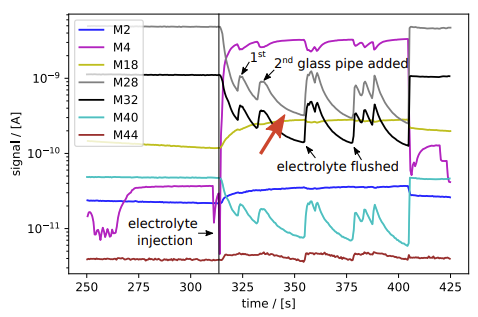
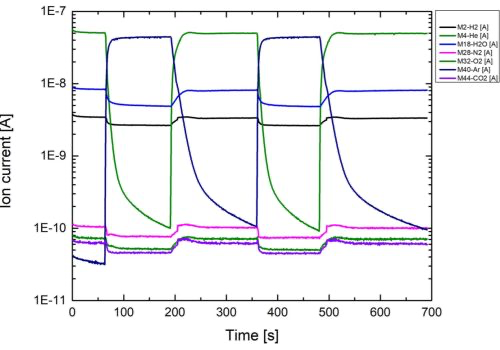
As an application example of the gas exchange system, this section will describe how gas pulses can be sent to the sample. In Figure 1, a plot of two Ar gas pulses is shown. In order to minimize switching time, a few tricks are described in the following.

Benchmark Measurement

The system can be characterized by standardized benchmark measurements described in this Technical Note. Caution must be exercised by the user when performing such experiment, as variations in electrode active surface area, electrolyte composition, electrolyte purity, surface cleanliness, etc. may influence the results.
Potentiostat instability

In this application note, the effect of capacitive cells on different BioLogic potentiostat architectures is shown. When connecting a highly capacitive cell to a potentiostat, measuring low currents is demanding for potentiostat electronics and can lead to potentiostat instability under certain circumstances

Tuning of the QMS

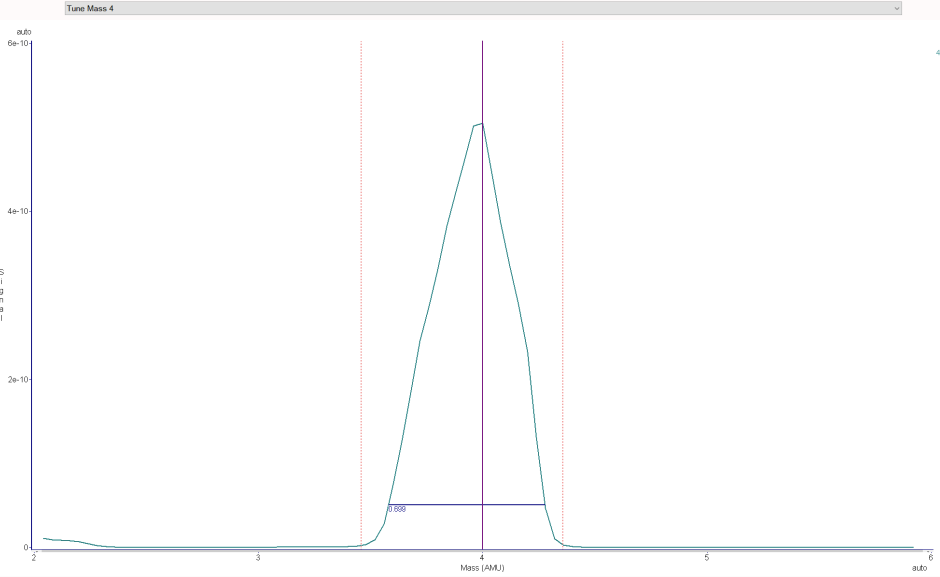
Regular tuning of the mass spectrometer ensures reproducible data. There are two parameters that need to be tuned: peak shape and position, and the electron multiplier (EM) voltage if using the secondary electron multiplier (SEM) detector. Both is done in Pfeiffer Vacuum’s software Er på vej! MassSpec.

Air-free transfer from glovebox

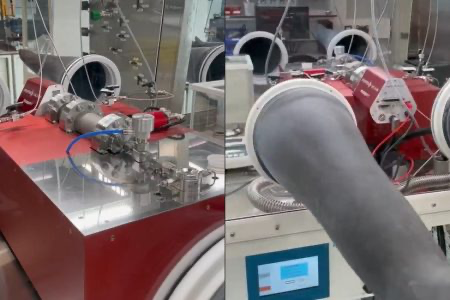
In this technical note, a protocol to perform air‐sensitive experiments is described. This protocol is designed for e.g. battery experiments that require air‐free conditions.

Soft ionization

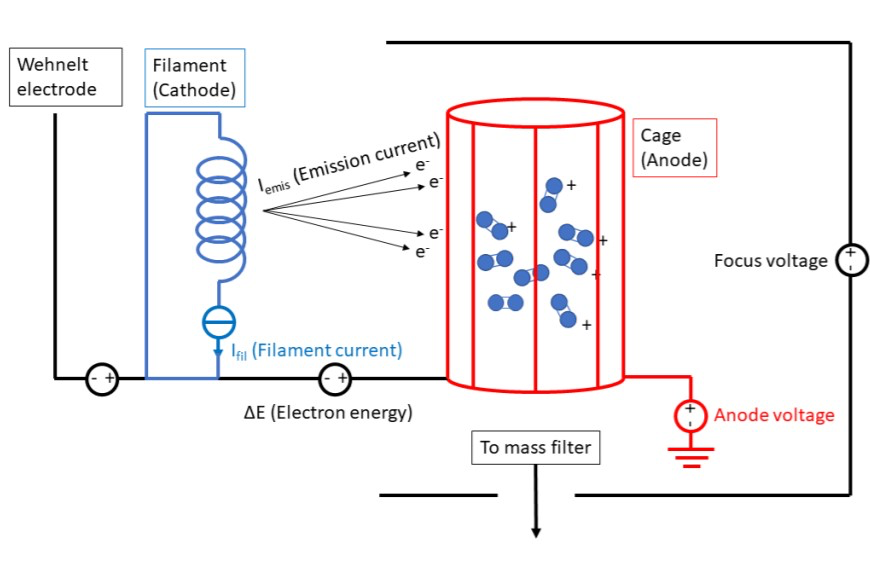
Before gases can be analyzed in a mass filter, they must first be ionized in an ion source by means of electron bombardment (Figure 1). Electrons are emitted from an electrically heated cathode (filament).

Setting up ion gauge interlock

The external gauge is connected to the QMS via the analogue output. It has an identifier resistor, so it should be automatically recognized in PVMassSpec. The only requirement is that the gauge should be powered up before the QMS.

Avoiding MS-Signal fluctuations caused by bubbles

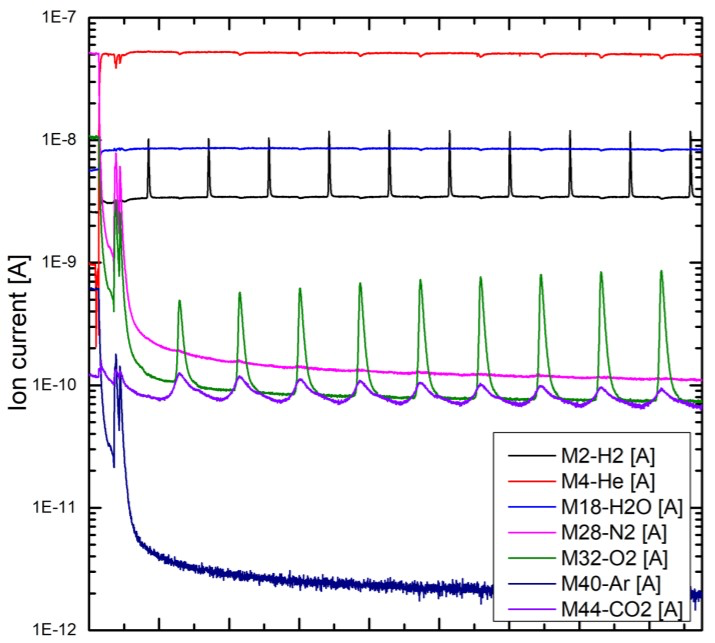
The presence of gas bubbles during EC‐MS experiments may negatively impact the quality of both the EC‐ and the MS data, most notably by inducing fluctuations to the MS signal(s).

Best Practices for OER experiments

The EC‐MS Application Note #4 gives a thorough introduction on the benefits of using the EC‐MS for OER studies. In this document, we list some best practices recommended to obtain the best possible results with your Spectro Inlets EC‐MS.

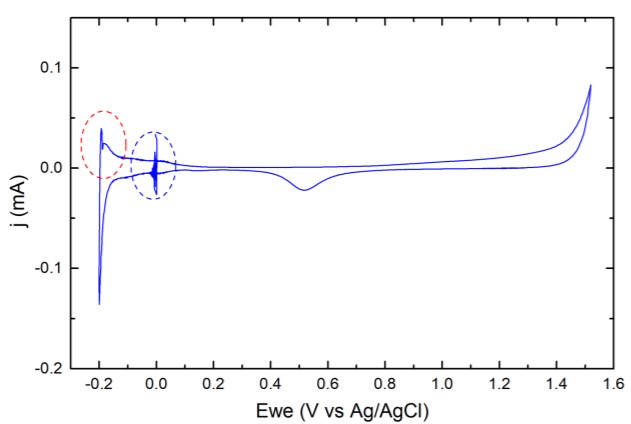
Best practices using EC‐MS system for HER

The EC‐MS Application Note #3 gives a thorough introduction on the benefits of using the EC‐MS for HER studies. In this document, we list some best practices recommended to obtain the best possible results with your Spectro Inlets EC‐MS.

Application notes

CO-stripping

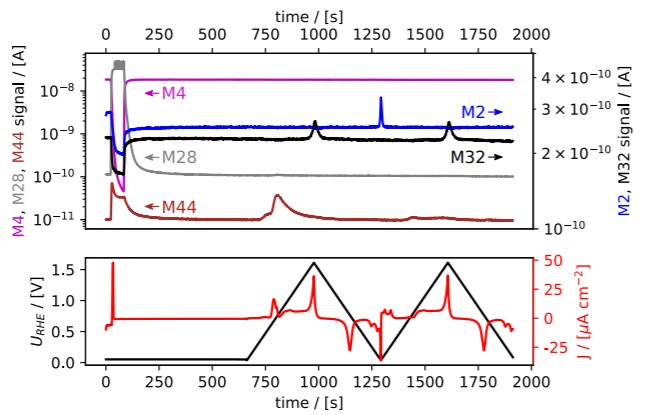
The CO‐strip technique is based on the electrochemical oxidation of an adsorbed layer of CO from a sample surface of interest. The technique is often used to quantify the active surface area of the sample and can provide insight on crystalline facets and binding energies of the adsorbed species. Furthermore, the CO2 mass spectrometer (MS) signal of the EC‐MS may be calibrated via the CO‐strip technique.

EC‐MS Quantification using ixdat

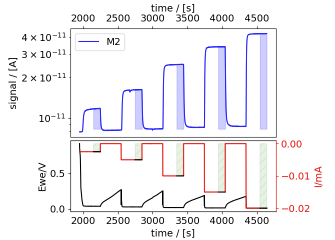
Quantified mass spectrometry data allows for the determination of faradaic efficiencies of reaction products, surface coverage and other important quantities which can help elucidating electrochemical processes.

Hydrogen evolution reaction using EC‐MS system

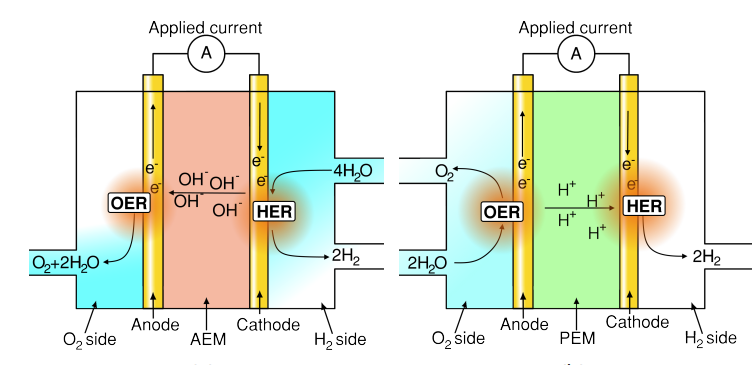
The hydrogen evolution reaction (HER) is paramount for many renewable energy storage and conversion schemes, proposed for a sustainable energy economy [1]. For a simplified overview of such an energy scheme incorporating polymer electrolyte membrane electrolyzers ﴾PEMEs﴿ and polymer electrolyte membrane fuel cells (PEMFCs), see figure 1.

Oxygen evolution reaction using EC‐MS system

Understanding and improving material performance for oxygen evolution reaction (OER) is paramount for many renewable energy storage and conversion schemes proposed for a sustainable economy [1].