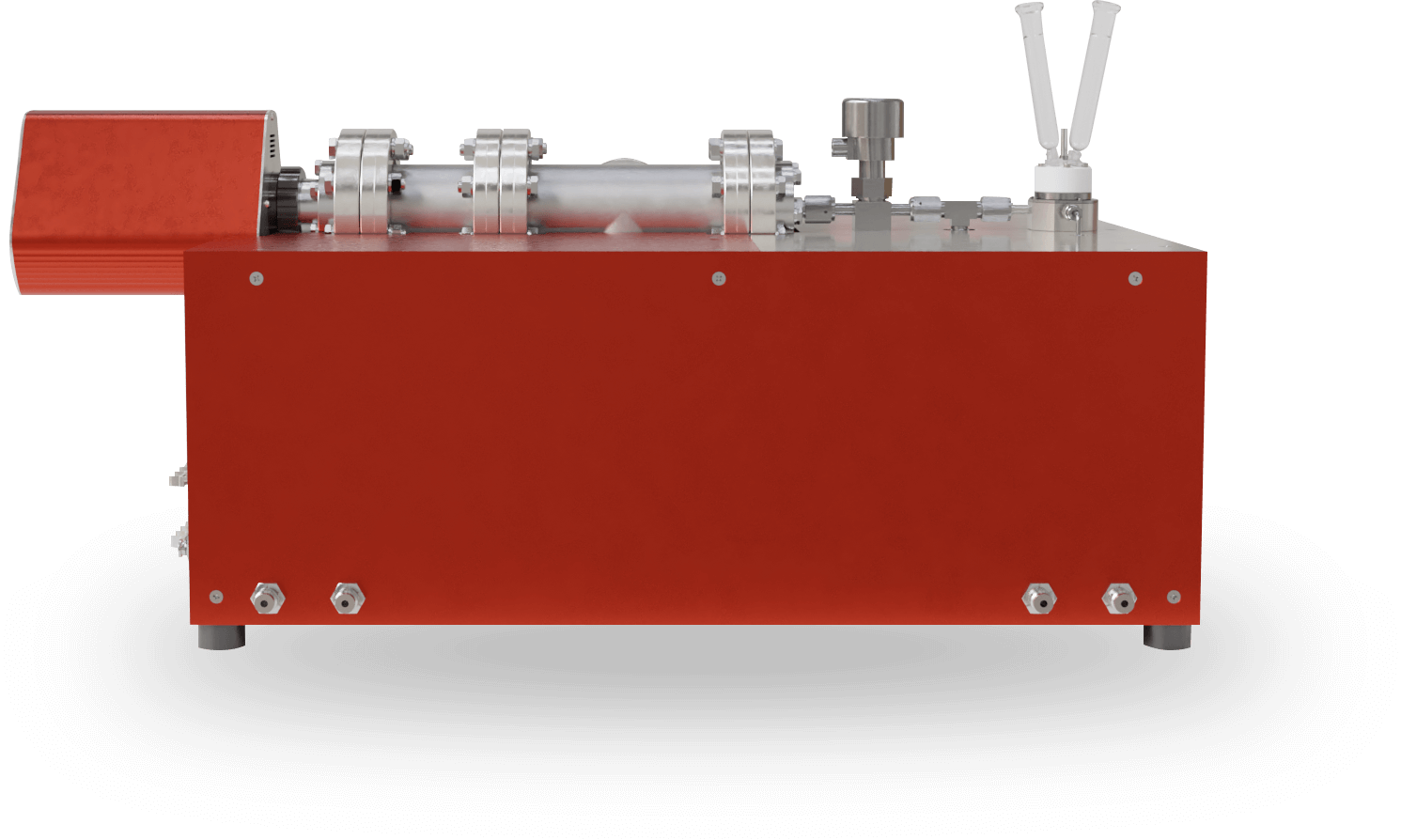
EC-MS Premium
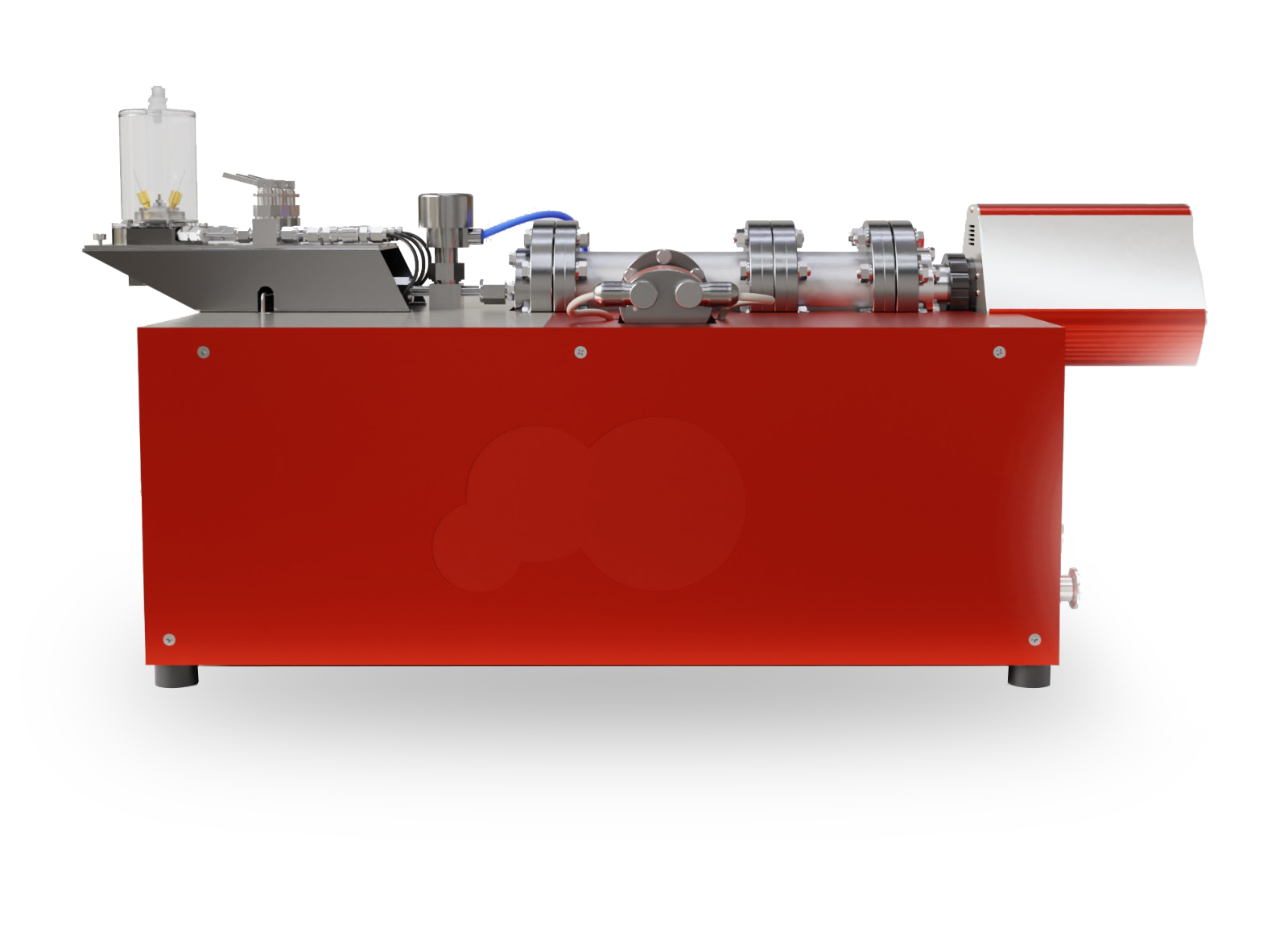
Analyze battery gas formation and degradition effortless for battery research and development
The EC-MS Premium gives you the ability to determine the origin and the nature of the gas-evolution, enabling a better understanding of the Solid Electrolyte Interphase formation and degradation of Electrodes and electrolytes. This accelerates the development of new and safer batteries with a shorter time to market.
Employing Electrochemical Mass Spectrometry facilitates the real-time analysis of gas production in battery studies.
This technique allows researchers, especially from r&d, to analyse battery gases and pinpoint the source and characteristics of gas emissions, enhancing comprehension of how Solid Electrolyte Interphase is formed and the breakdown of electrodes and electrolytes occurs. Consequently, this insight speeds up the creation of newer, safer battery technologies, leading to a reduced time before they can be brought to market.
Continuous
data
Small volume sampling allows uninterrupted data collection
Exceptional
sensitivity
Measure desorption of 0.5‰ of a monolayer within 0.5 second
Fully
quantifiable
Full product collection and accurate calibration
Accelerate battery research
It facilitates a deeper understanding of formation of the Solid Electrolyte Interphase (SEI) and insight into the degradation of electrodes and electrolytes. To accelerate the development of better and safer lithium-ion batteries, the EC-MS Premium aids in determining the nature and origin of gas-evolution. The combination of electrochemistry (EC) and mass spectrometry (MS) provides a potent tool to analyze product formation in batteries.
Via an optimized inlet membrane chip with an integrated microcapillary, Spectro Inlets offers a unique system to couple the ambient battery environment with the vacuum conditions of MS. This solution enables continuous transport of volatiles to the mass spectrometer while inhibiting electrolyte evaporation.
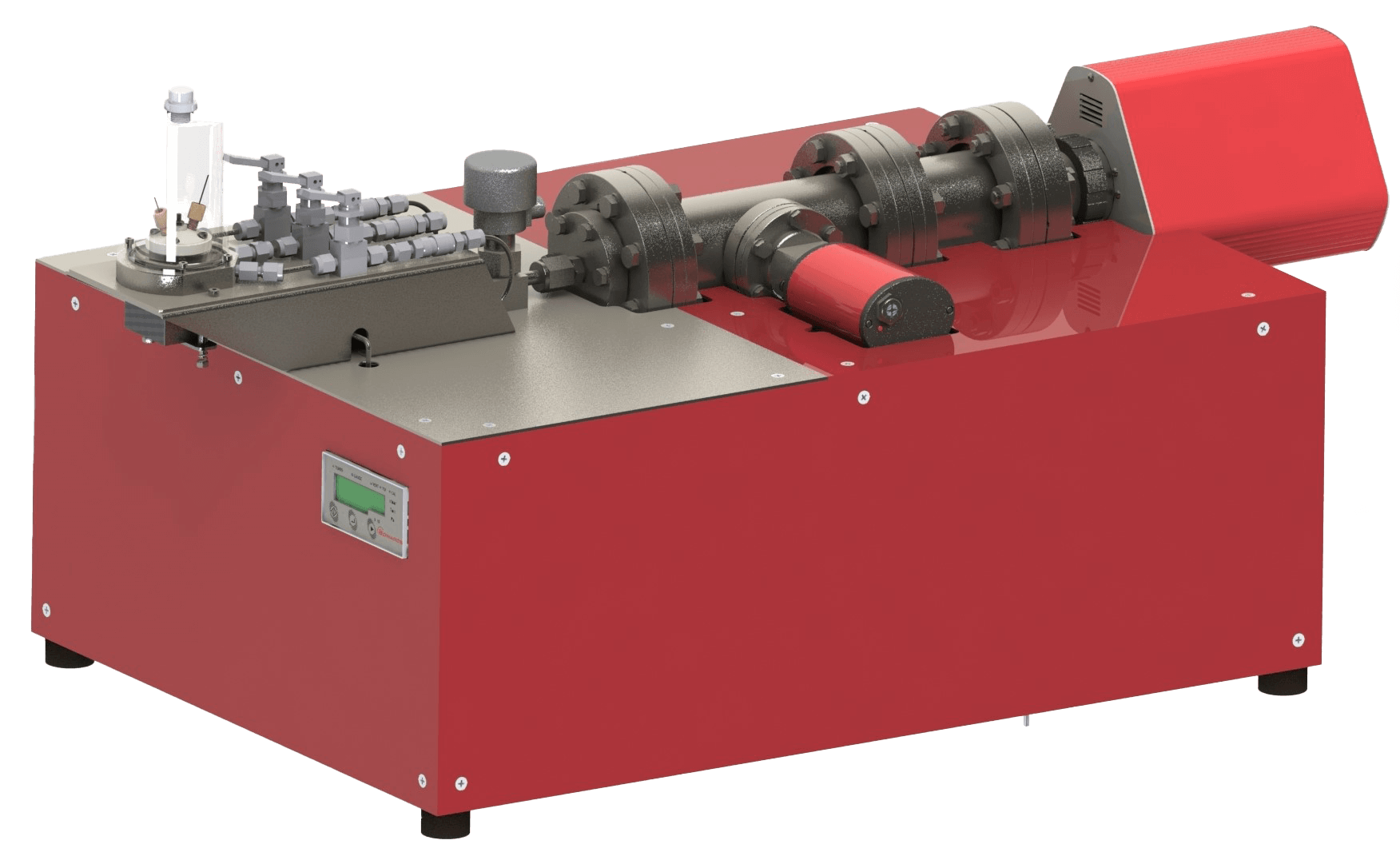
Advantages
Negligible electrolyte evaporation allowing long duration test
Turnkey solution with integrated software
Real-time and fully quantifiable
Transfer module for inert sample transfer from glovebox
Temperature control of the cell (15-70 °C)
Unprecedented
sensitivity
Challenges for
Li-ion batteries
01
Highly reactive
Li may spontaneously react with electrolytes, metals and H 2 O/O 2 traces etc lowering ion availability and conductivity, reducing battery efficiency and life time
02
Non uniform SEI growth
Forming dendrites, may adversely i) insulate Li ii) expand SEI volume (lowering power density) iii) create a short circuit (a serious safety issue) through the separator material, see figure below
03
Instabile SEI-bilding
resulting in i) additional SEI growth accompanied by electrolyte decomposition and gas evolution ii) Li passivation and iii) increased resistances through a growing SEI
Gas evolution accompanies all processes mentioned in issues 01 to 03 Hence, on line g as analysis combined with electrochemical data acquisition may provide battery researchers with important information about SEI formation, electrolyte decomposition and the role of the H 2 O/O 2 content in the battery Thus, the EC MS Premium can provide valuable insights for developing better and safer Li-ion or other types of batteries
These scientific challenges result in these more practical challenges:
Battery Capacity is fundamentally about the energy a battery can hold and release, with increasing this capacity being a key focus in research to boost energy density and device runtime. Enhancing this involves overcoming hurdles like creating batteries with higher energy densities for more compact and efficient storage, and discovering materials that can efficiently store ions
and electrons.
Cycle Life reflects the battery’s durability across charge and discharge cycles before performance decline. Challenges include electrode material degradation, electrolyte deterioration leading to gas release, and the importance of thermal management to prolong cycle efficiency.
Safety is critical, with risks such as battery swelling from gas evolution. Research also navigates contamination risks from impurities affecting battery
integrity.
Cost and Sustainability are vital for adoption, facing challenges in finding cost-effective, eco-friendly materials and refining manufacturing for less environmental impact.
How it
works
The EC-MS Premium gives you the ability to determine the origin and the nature of the gas-evolution, enabling a better understanding of the Solid Electrolyte Interphase (SEI) formation and degradation of electrode and electrolytes. This accelerates the development of new and safer batteries with a shorter time to market. Combining electrochemistry (EC) with mass spectrometry (MS) provides a strong tool for analyzing electrochemical product formation in batteries.
Through an optimized membrane chip with integrated microcapillary, Spectro Inlets offer a unique inlet coupling the ambient battery environment to the vacuum conditions of the MS. The hydrophobic membrane facilitates transport of volatiles to MS while inhibiting electrolyte evaporation.
Things that can be analyzed with the EC-MS Premium
Thermal Runaway
Thermal Runaway is a dangerous condition in batteries where excessive heat generation leads to a self-sustaining, uncontrolled temperature and pressure increase, potentially causing battery failure or explosion.
Battery Gassing
Analyzing battery gases is about the release of gases from a battery, usually due to electrolysis, which can indicate overcharging, degradation, or internal faults.
Analysis of Lithium-ion Batteries
The study of lithium-ion batteries focusing on their performance, aging mechanisms, and safety aspects through various analytical techniques.
Battery Gas Evolution
Battery Gas evolution is the process by which gases are produced within a battery, often during charging or discharging, which can affect performance and safety.
Battery Electrolyte Solution
A conductive medium within batteries that allows for the flow of
ions between the anode and cathode, essential for battery operation.
Types of batteries where research can make use of the EC-MS Premium
Lithium-Ion Batteries (Li-ion):
These are widely used in portable electronics, electric vehicles, and renewable energy applications due to their high energy density and longevity. They come in several chemistries including lithium cobalt oxide, lithium manganese oxide, lithium nickel manganese cobalt oxide (NMC), and lithium nickel cobalt aluminum oxide (NCA).
Lithium Iron Phosphate Batteries (LiFePO4)
Nickel-Metal Hydride Batteries (NiMH)
Lead-Acid Batteries
Sodium-Ion Batteries
Flow Batteries
Who could typical be the user of the EC-MS Premium?
The typical user of the EC-MS Premium is an industrial R&D lab experimenting with new battery chemistries, including but not limited to Li-ion, Na-ion and Li-air chemistries.
As the SEI formation is temperature dependent and comes with temperature changes, temperature monitoring and control are important for the users. Other important features of the EC-MS are the high sensitivity, the possibility of directly placing non-aqueous electrolytes on the chip, the possibility
to program automated procedures in the software, and the low evaporation rate of the electrolyte.
They will use the EC-MS Premium to investigate solid electrolyte interphase (SEI) formation and stability, gas evolution from new electrode materials at high voltages or when using new electrolytes (or electrolyte additives). Such a lab can be positioned in different positions along the value chain – material developers (electrode materials and electrolytes), cell manu-facturers (if they also work on development of chemistries themselves) as well as some large end-customers for their R&D in-house labs (e.g. car manufacturers).
Comparing
our products