Promoting Cu-catalysed CO2 electroreduction to multicarbon products by tuning the activity of H2O
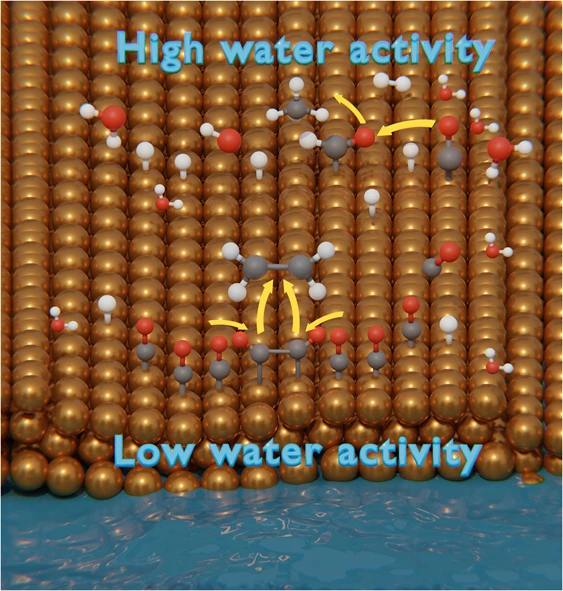
Tuning water activity in concentrated salt electrolytes from 0.97 to 0.47 controls C–C coupling vs. C1 product formation on Cu, achieving ~73% faradaic efficiency toward C2+ at −110 mA cm⁻² at modest overpotentials. Lower H₂O activity raises CO surface coverage and shifts C2+/C1 ratios up to 20-fold — establishing thermodynamic water activity as a practical selectivity lever for CO₂ reduction.
Light-driven urea oxidation for a wearable artificial kidney
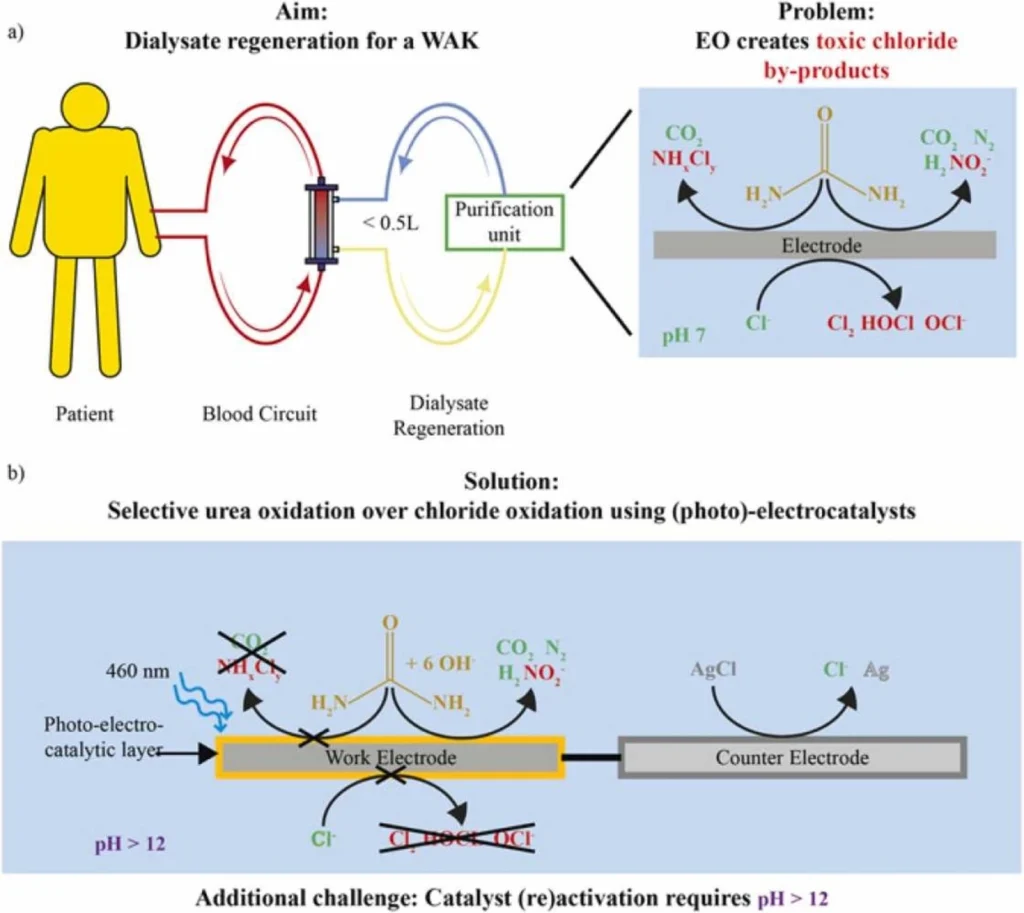
A hematite/NiOOH photoelectrode paired with an AgCl cathode selectively oxidises urea over chloride under LED illumination alone — no external bias required. MS confirms N₂ as the primary nitrogen product with no ammonia or nitrate, and extrapolation suggests 0.5 m² of electrode area could clear a day’s urea load within 24 hours, enabling a viable wearable artificial kidney concept.
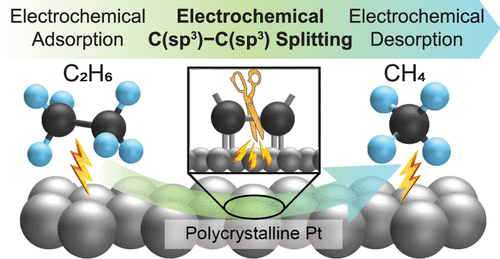
Electrocatalytic Scission of Unactivated C(sp3)–C(sp3) Bonds through Real-Time Manipulation of Surface-Bound Intermediates
NiFeOxHy water oxidation nanoparticle size and lattice oxygen studied by operando EC-MS shows OER in 1M KOH is surface-limited at a record 6.2 s-1.
Electrochemical decarboxylation of acetic acid on boron-doped diamond and platinum-functionalised electrodes for pyrolysis-oil treatment
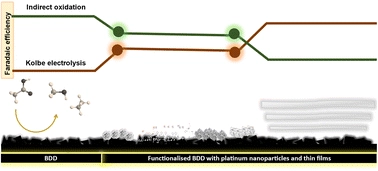
BDD electrodes decarboxylate acetic acid at 90% faradaic efficiency without competing OER, forming methanol and methyl acetate via hydroxyl radical reactions. Pt-modified BDD shifts selectivity toward ethane (Kolbe product), with thin Pt layers achieving >70% FE — offering a practical route for electrochemical acidity reduction in pyrolysis oil upgrading.
Impact of impurities on water electrolysis: a review
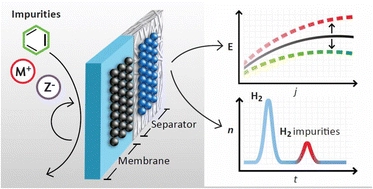
NiFeOxHy water oxidation nanoparticle size and lattice oxygen studied by operando EC-MS shows OER in 1M KOH is surface-limited at a record 6.2 s-1.
Time and Potential-Resolved Comparison of Copper Disc and Copper Nanoparticles for Electrocatalytic Hydrogenation of Furfural
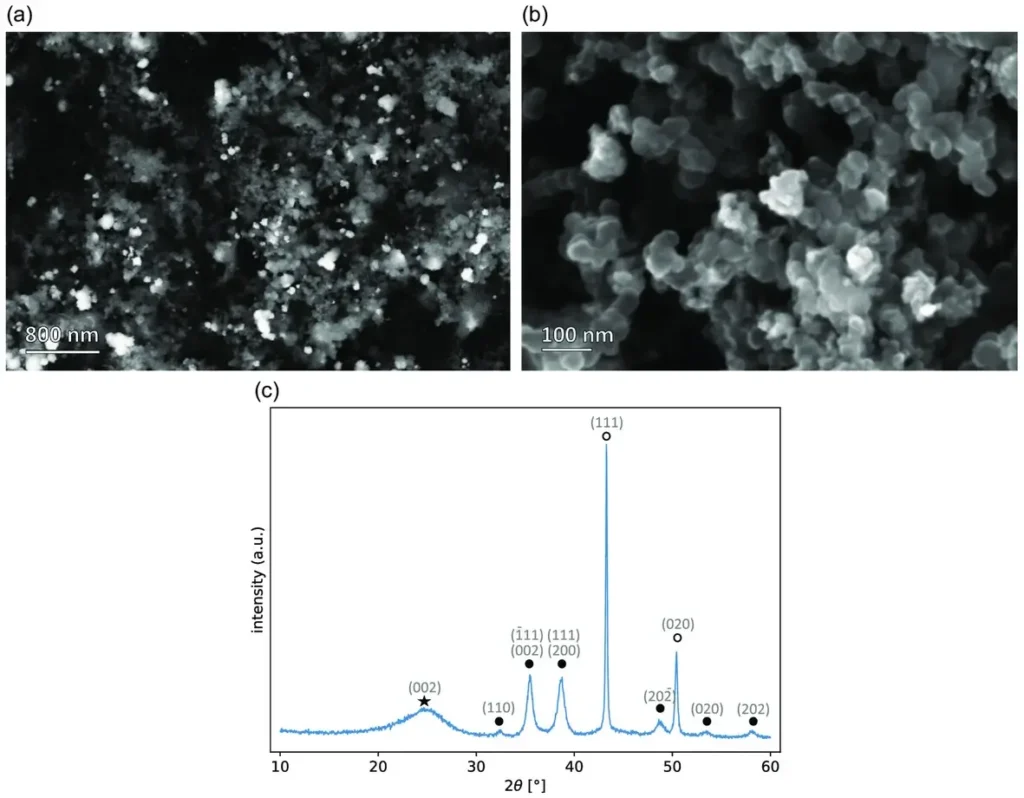
EC-MS enables time- and potential-resolved detection of furfural hydrogenation products on Cu disc vs. Cu nanoparticles. Nanoparticles show higher activity toward 2-methylfuran and HER, while the polycrystalline disc favours furfuryl alcohol — differences attributed to distinct surface domain compositions confirmed by lead underpotential deposition.
Stability challenges of carbon-supported Pt-nanoalloys as fuel cell oxygen reduction reaction electrocatalysts
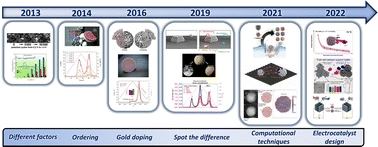
Carbon-supported Pt nanoalloys deliver sufficient ORR activity for commercial PEM fuel cells, but stability remains the outstanding challenge. This review surveys current understanding of their degradation mechanisms.
Carbon-nitrogen bond formation on Cu electrodes during CO2 reduction in NO3- solution
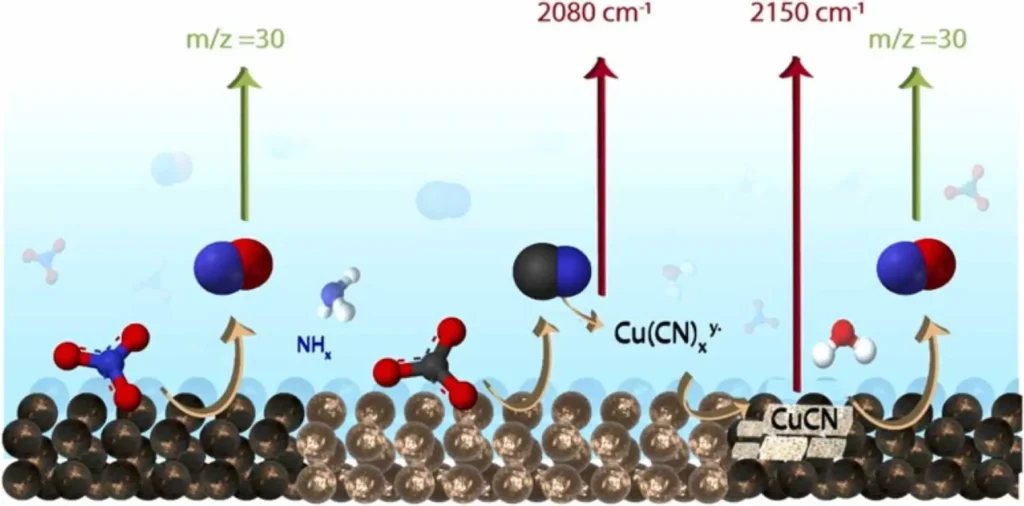
Raman spectroscopy reveals that co-reduction of NO₃⁻ and CO₂ on Cu forms Cu-C≡N–like species — soluble intermediates that drive significant surface restructuring and yield NO upon oxidation. The species appear to originate from Cu-CO and Cu-NHx intermediates, with implications for electrochemical C-N bond formation toward urea, amines, and amides.
Quantification of Hydride Coverage on Cu(111) by Electrochemical Mass Spectrometry
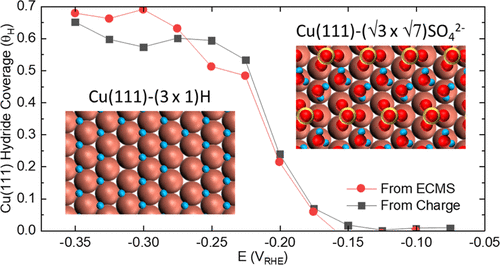
EC-MS combined with chronoamperometry quantifies the Cu(111) surface hydride phase in H₂SO₄, tracking H₂ production to partition reduction current between anion desorption, hydride formation, and HER. Saturated hydride coverage of 0.67 is established, with thin-layer cell geometry enabling total H₂ collection to overcome diffusional delay in the EC-MS response.
Rational Catalyst Design for Higher Propene Partial Electro-oxidation Activity by Alloying Pd with Au
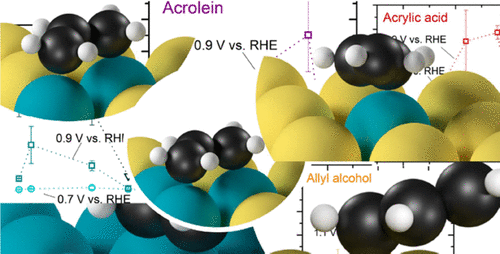
Alloying Pd with 10% Au disrupts the inhibiting adsorbate layer that limits propene oxidation on pure Pd, delivering a 2.4× activity boost while maintaining high allyl oxidation selectivity. Statistical modelling and EC-MS point to an optimal surface ratio of ~1 Au per 6 Pd atoms, with peak activity just below Pd cluster oxidation potential.