How to Minimise Hydrogen Evolution on Carbon Based Materials?
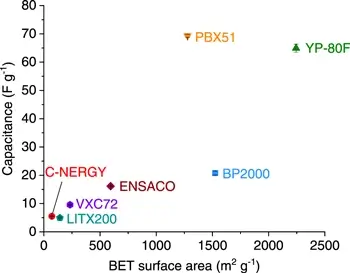
EC-MS screening of seven commercial carbon materials identifies metal impurity content as the primary driver of hydrogen evolution — carbons with low metal contamination show the lowest HER rates, with onset at −0.38 V vs RHE. A practical finding for suppressing parasitic HER in CO₂ reduction, battery, and supercapacitor systems.
Local reaction environment for selective electroreduction of carbon monoxide
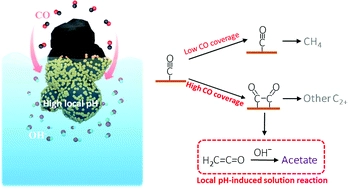
Local OH⁻ concentration near the cathode surface is shown to drive acetate formation via a homogeneous solution reaction, enabling up to 50% acetate faradaic efficiency within a >90% total C2+ selectivity. CO2 capture rate serves as a simple proxy for local pH in GDE-based CO reduction, linking both local pH and CO availability to C2+ product distribution.
Transients in Electrochemical CO Reduction Explained by Mass Transport of Buffers
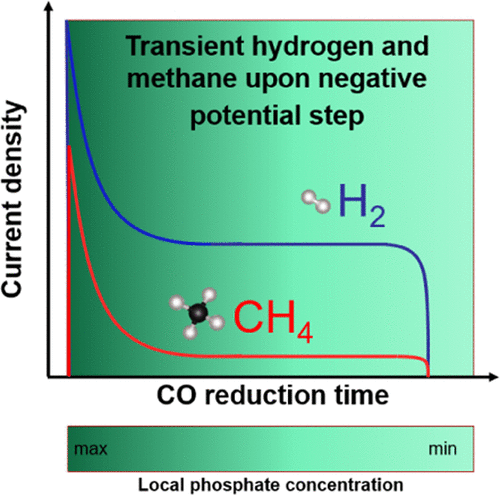
EC-MS reveals short-lived methane and hydrogen transients during pulsed CO reduction in phosphate buffer — absent in borate buffer. The effect is attributed to phosphate acting as a facile proton donor that depletes locally, supported by mass transport modelling, and highlights buffer identity as a key lever for proton-coupled electroreduction selectivity.
Electroreduction of NO3− on tubular porous Ti electrodes
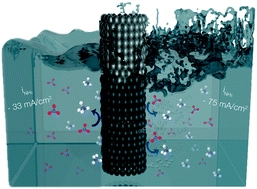
Tubular porous Ti electrodes convert nitrate to ammonia with 58% faradaic efficiency and −33 mA cm⁻² partial current density, rising to −75 mA cm⁻² with inert gas flow through the hollow fiber wall. EC-MS additionally identifies hydroxylamine, NO, and N₂O as byproducts — pointing toward a viable route for agricultural nitrate recycling.
The low overpotential regime of acidic water oxidation part I: the importance of O2 detection
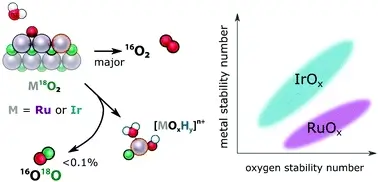
EC-MS extends OER activity measurement on Ru-based catalysts across six orders of magnitude down to 1.30 V_RHE — revealing a previously unobserved Tafel slope of 25 mV dec⁻¹ below 1.4 V. A microkinetic model fits the expanded dataset, and the results show how onset potential and exchange current density are artefacts of detector sensitivity.
Quantitative Operando Detection of Electro Synthesized Ammonia Using Mass Spectrometry
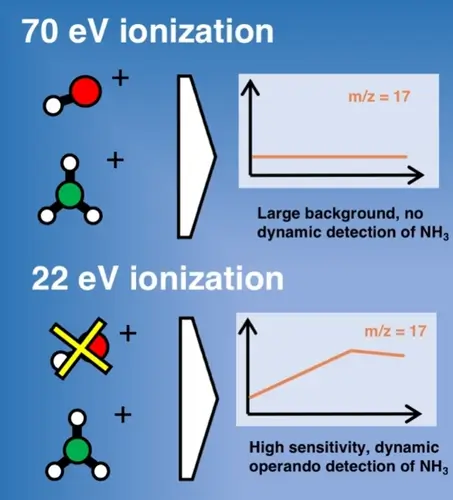
A chip-based EC-MS setup with 22 eV selective ionisation enables operando ammonia detection down to a few pmol s⁻¹ in both aqueous and non-aqueous electrolytes. Faradaic efficiency of 49±3% is demonstrated at ambient pressure, and continued ammonia production after lithium electroplating termination is observed — offering a mechanistic explanation for efficiency gains seen under dynamic cycling conditions.
Effect of Electrolyte and Electrode Configuration on Cu-Catalyzed Nitric Oxide Reduction to Ammonia
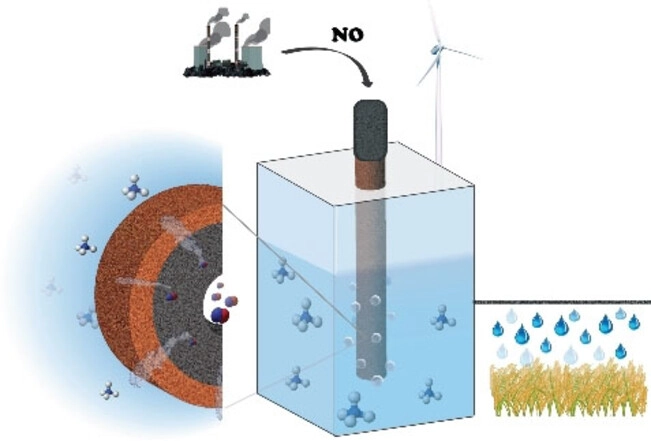
Cu electrodes favour ammonia formation from NO reduction in acid, while neutral conditions shift selectivity toward N₂O and N₂ — confirmed by EC-MS. However, using a hollow fiber electrode geometry with high NO gas flow rates, ~90% faradaic efficiency and 400 μmol h⁻² cm⁻² NH₃ production are achieved even at neutral pH, pointing toward viable waste-NO-to-fertilizer conversion.
Surface Hydride Formation on Cu(111) and Its Decomposition to Form H2 in Acid Electrolytes
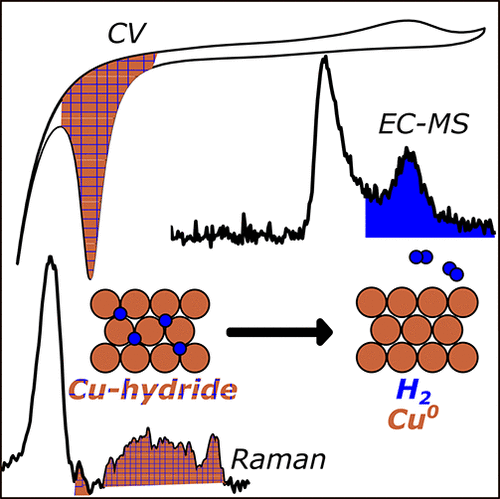
Cu(111) uniquely forms a surface hydride coincident with anion desorption, which decomposes to yield H₂ by recombination rather than oxidation — confirmed by MS and Raman spectroscopy across multiple acid electrolytes. The effect is absent on Cu(110) and Cu(100), and the hydride phase may play a catalytic role in CO₂ reduction to CH₄.
Online Electrochemistry–Mass Spectrometry Evaluation of the Acidic Oxygen Evolution Reaction at Supported Catalysts
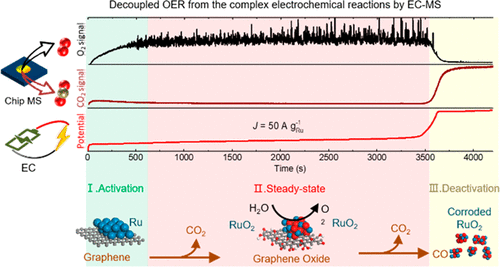
Chip-based EC-MS decouples true oxygen evolution from competing anodic side reactions in a graphene-supported Ru catalyst, enabling accurate measurement of OER onset potential and Faradaic efficiency. Activation, steady-state, and degradation processes are resolved individually — addressing a persistent measurement challenge in OER electrocatalysis.
Monitoring oxygen production on mass-selected iridium–tantalum oxide electrocatalysts
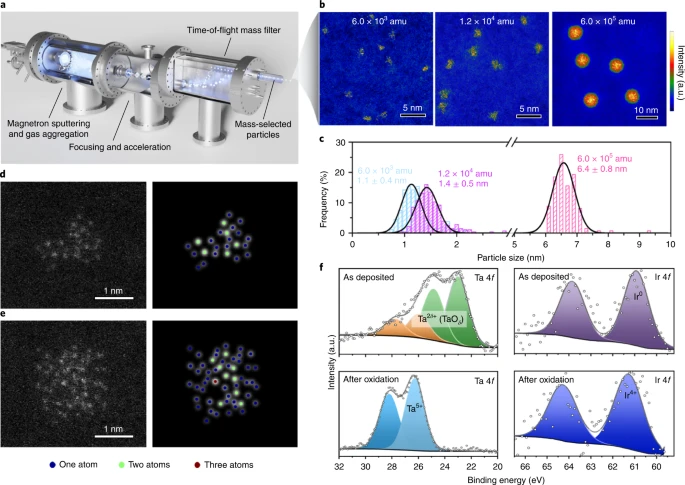
Mass-selected IrTaOx nanoparticles below 2 nm deliver 2× higher mass activity and 4× higher turnover frequency than IrO₂ at 320 mV overpotential. EC-MS with isotope labelling quantifies active sites under dynamic conditions, while DFT points to special Ir coordination environments as the origin of the enhanced OER performance.