Model electrocatalysts for the oxidation of rechargeable electrofuels – carbon supported Pt nanoparticles prepared in UHV
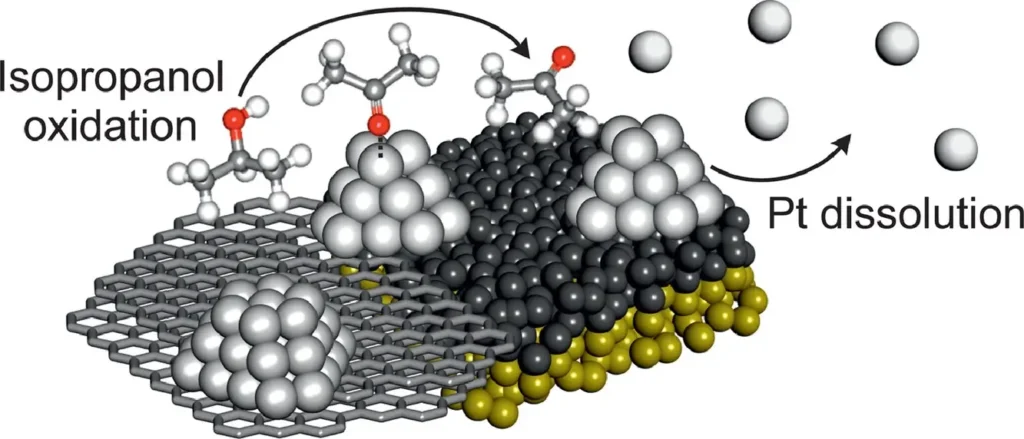
UHV-prepared Pt nanoparticles on carbon supports serve as model electrocatalysts for studying isopropanol oxidation — part of a rechargeable electrofuel cycle with acetone. Oxidation onset is at 0.3 V_RHE with high acetone selectivity and only trace CO₂ as a side product; no adsorbed CO is observed, and comparison with Pt(111) suggests particle size and low-coordination sites play a minor role.
Enhancing Iridium Nanoparticles’ Oxygen Evolution Reaction Activity and Stability by Adjusting the Coverage of Titanium Oxynitride Flakes on Reduced Graphene Oxide Nanoribbons’ Support
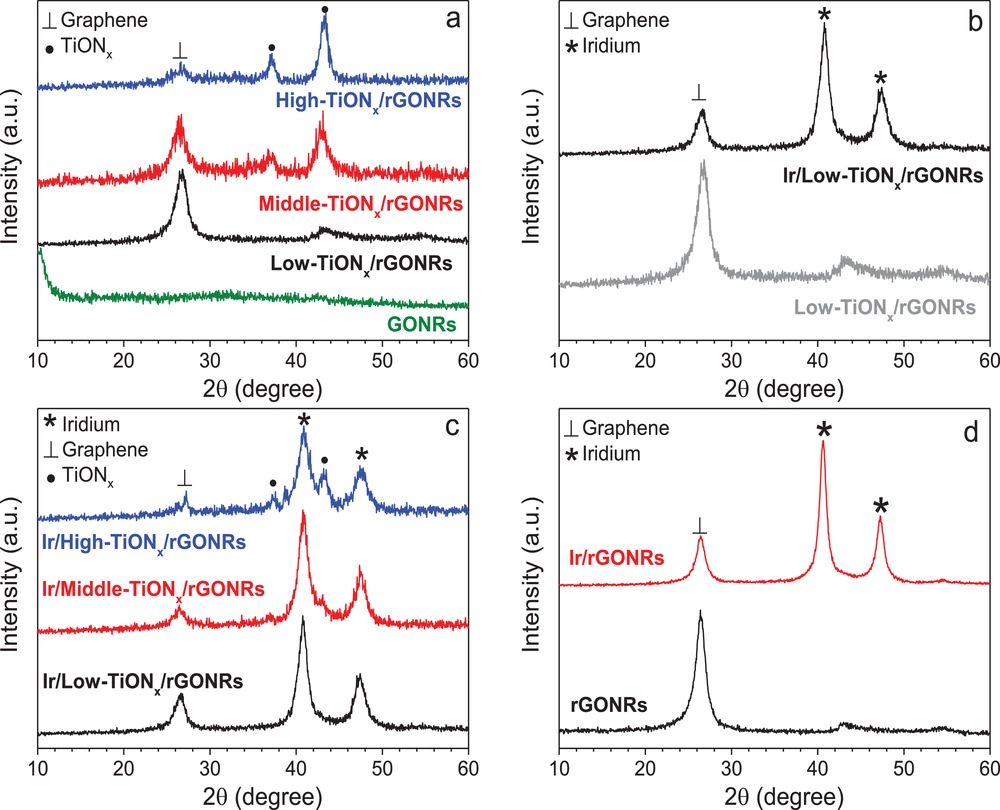
A carbon-ceramic nanocomposite of Ir nanoparticles and TiONx flakes on reduced graphene oxide nanoribbons delivers up to 30× higher OER activity than commercial IrO₂. Performance is driven by heterojunction formation between the three phases — demonstrating that morphology and particle distribution can unlock strong synergistic effects in iridium catalysts.
On-chip electrocatalytic NO sensing using ruthenium oxide nanorods

RuOx nanorod electrodes outperform bare Pt for amperometric NO sensing — lower onset potential (675 vs. 800 mV) and higher current density — and are validated for organ-on-chip use by detecting micromolar NO from live endothelial cell culture in real-time.
Dynamic Interfacial Reaction Rates from Electrochemistry–Mass Spectrometry
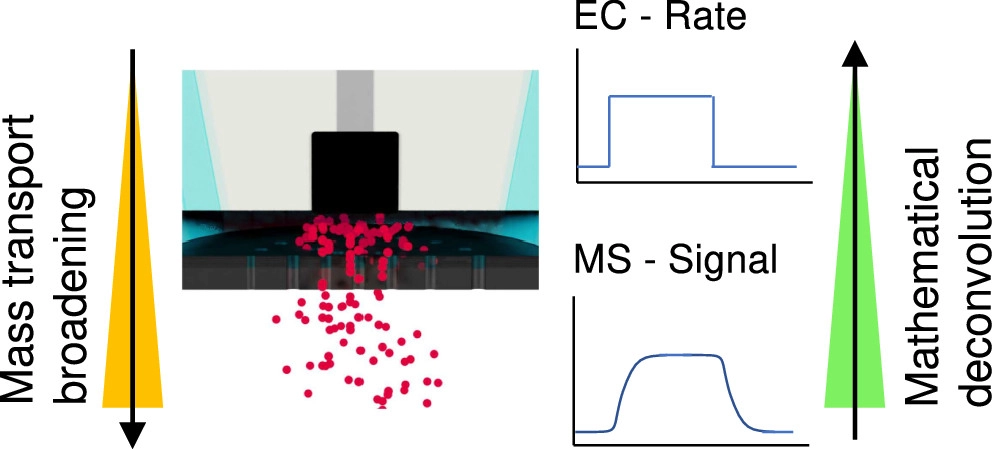
NiFeOxHy water oxidation nanoparticle size and lattice oxygen studied by operando EC-MS shows OER in 1M KOH is surface-limited at a record 6.2 s-1.
The Importance of Potential Control for Accurate Studies of Electrochemical CO Reduction
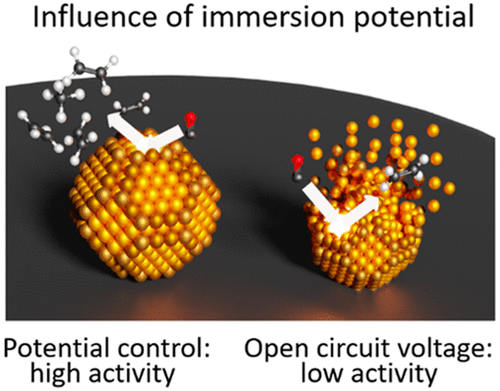
Copper nanoparticle CO reduction activity is underestimated by 4 orders of magnitude when electrodes are immersed without potential control — dissolution during immersion creates ill-defined catalyst morphologies. An auxiliary cell enabling controlled-potential immersion suppresses Cu dissolution and reveals the true intrinsic activity.
Tracking oxygen atoms in electrochemical CO oxidation – Part I: Oxygen exchange via CO2 hydration
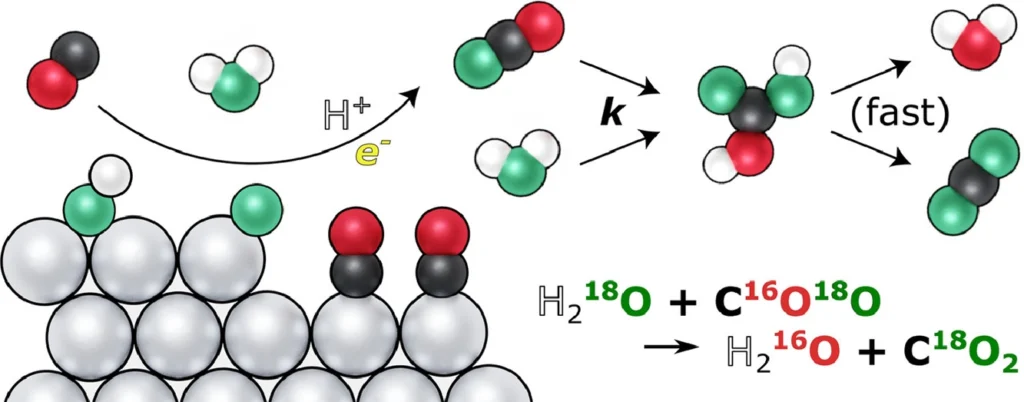
This is the same mismatched abstract as before — it’s the “Anodic molecular hydrogen formation on Ru and Cu” text again, not the CO oxidation oxygen tracking paper. Could you double-check and paste the correct abstract?
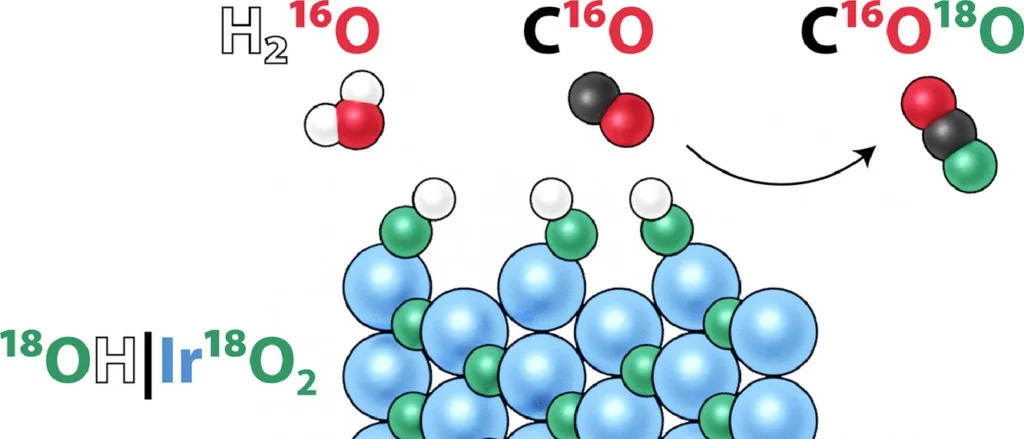
Tracking oxygen atoms in electrochemical CO oxidation – Part II: Lattice oxygen reactivity in oxides of Pt and Ir
NiFeOxHy water oxidation nanoparticle size and lattice oxygen studied by operando EC-MS shows OER in 1M KOH is surface-limited at a record 6.2 s-1.
Resolving the nanoparticles’ structure-property relationships at the atomic level: a study of Pt-based electrocatalysts
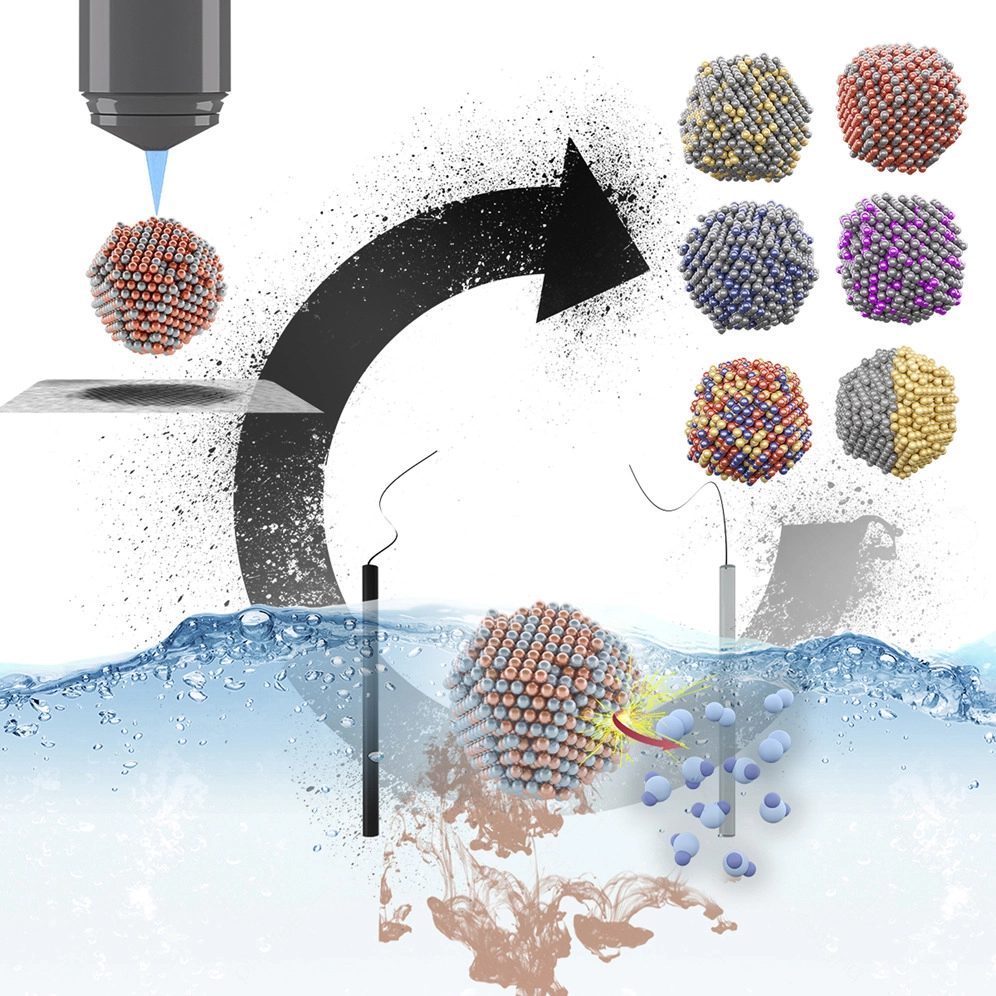
Commercially available Pt-alloy nanoparticles for oxygen reduction are more structurally complex than established models account for. A bottom-up, single-particle approach — tracking atomic structure, strain, and degradation before and after electrochemical cycling — reveals structure-stability relationships that bulk characterisation misses.
Electrochemical Stability and Degradation Mechanisms of Commercial Carbon-Supported Gold Nanoparticles in Acidic Media
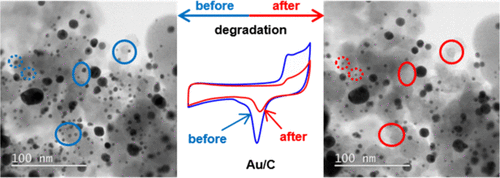
A 10,000-cycle accelerated stress test on commercial Au/C in acid reveals that small nanoparticles (<5 nm) are the primary degradation mechanism — dissolving preferentially and driving a ~65% loss in electrochemical surface area despite minimal overall gold mass loss. Chloride accelerates degradation markedly, with potential utility for gold recycling.
CO as a Probe Molecule to Study Surface Adsorbates during Electrochemical Oxidation of Propene
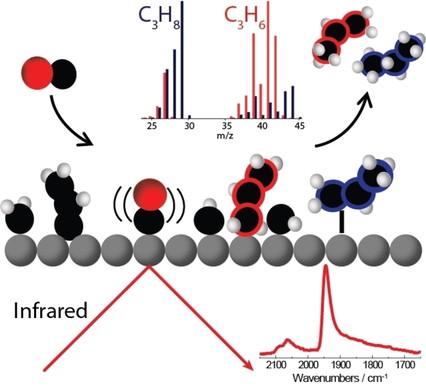
EC-MS and ATR-FTIR are used to probe adsorbates formed during electrochemical propene oxidation, with CO as a displacement agent. At least two distinct classes of propene intermediates are identified – some reactive, some blocking – via CO displacement, electrochemical stripping, and a redshift in the ν(C−O) IR mode.